
Atlanta Homeowners: Don't Let Your Equity Disappear After a Fulton County Tax Sale
Hey there. If you’re reading this, chances are things have been a bit heavy lately. Maybe you’ve recently gone through a tax sale in Fulton County, or perhaps you’re seeing the notices pile up and you’re feeling that weight in your chest. First, I want you to take a deep breath. You are not alone, and: more importantly: you might not be "broke" just because the house was sold.
At Heritage Surplus Solutions, we talk to people every day who feel like they’ve lost everything when the gavel drops at the courthouse steps. But here’s the truth that the county doesn’t always go out of its way to explain: just because you lost the deed doesn’t mean you lost your equity.
In Atlanta, especially within Fulton County, there is often a pot of money left over after a tax sale. That money has a name: surplus funds: and legally, a big chunk of it likely belongs to you. But if you don't act, that money won't just sit there forever. It can disappear into the government’s pockets through a process called escheatment.
Let’s grab a coffee (even if it’s a virtual one) and talk about how to make sure that doesn't happen to you.
The Reality of Fulton County Tax Sales
Fulton County is a bit unique, and if we’re being honest, the system can feel a little stacked against homeowners. Unlike some other places, Fulton County often sells tax liens to private investors. You might have seen names like "InVesta" on your paperwork. These investors buy the debt, and if it isn't paid, they move forward with a tax sale.
Research shows that nearly 80% of the properties auctioned in Fulton County are in historically Black neighborhoods. This isn't just a financial issue; it's an emotional and community issue. When a home that has been in a family for decades goes to a tax sale, it feels like a piece of your history is being erased.
But here is where the "surplus" comes in. Let’s say you owed $10,000 in back taxes. If your home sells at the tax auction for $100,000, that extra $90,000 doesn’t just belong to the county or the investor. After the taxes and fees are paid, that remaining money is yours.

Why You Can’t Afford to Wait
I know it’s tempting to close the door on the whole experience. Foreclosure is exhausting. It’s tempting to just walk away and try to forget the whole thing happened. But walking away means leaving your legacy on the table.
In Georgia, specifically under O.C.G.A. § 48-4-5, there are very specific rules about who gets this money and when. If the money isn't claimed within a certain timeframe, the county can eventually turn it over to the state’s unclaimed property division. Once it goes there, the red tape gets thicker, the process gets longer, and it becomes much harder to get what is rightfully yours.
Think of that surplus money as your "moving on" fund. It’s the seed money for your next chapter: whether that’s a down payment on a new place, paying off other debts, or just giving yourself a safety net while you figure out your next move.
Understanding Your "Redemption Rights" vs. Your "Surplus Rights"
This is where a lot of Atlanta homeowners get confused. In Fulton County, you have two different paths after a tax sale:
The Right of Redemption: This is your right to "buy back" your house. In Georgia, you usually have 12 months after the tax sale to pay the winning bidder what they paid, plus a 20% penalty. It’s expensive, but it’s a way to save the home.
The Right to Excess Funds: If you can’t redeem the property (which, let’s be real, most people can’t afford to pay a 20% penalty on top of the sale price), you still have a right to the extra money generated by the sale.
You don't have to choose between being "homeless and broke" or "saving the house." If the house is gone, the money shouldn't be.

The "Escheat" Danger: Don't Let the State Keep Your Equity
The word "escheat" sounds like "cheat," and that’s essentially how it feels. Escheatment is a legal process where unclaimed property is handed over to the state government.
The county is required to hold onto these excess funds for a while, but they aren't going to call you every day to remind you to come get it. They might send one notice to the last address they have on file: which is often the house you just moved out of! If that notice sits in a pile of junk mail or goes to a vacant house, and you don't file a claim, that money eventually gets moved to the state.
We want to help you beat the clock. You’ve already been through enough; you shouldn't have to lose your financial future because of a missed deadline or a complicated form.
How the Process Works in Fulton County
If you’re ready to look into this, you’ll be dealing with the Fulton County Sheriff’s Office. They are the ones who hold the money after a tax sale. To get it, you have to prove who you are and that you were the owner at the time of the sale.
This involves:
Verification: Confirming the exact amount of funds held.
Documentation: Gathering your ID, the recorded deed, and sometimes a 50-year title search to prove no one else has a lien on that money.
Notarization: Every form you send to the Sheriff’s Office at 185 Central Ave SW has to be notarized.
It sounds like a lot of paperwork, doesn't it? That’s why so many people give up or hire expensive recovery companies that take 30% or 40% of the money as a fee.
Big News: Our Fulton County DIY Kit Launches June 1st!
We’ve been listening to your stories, and we know that many of you want to handle this yourselves but just don’t know where to start. You don't want to give away nearly half of your check to a stranger, but you're also overwhelmed by the legal jargon.
That’s why we are so excited to announce that on June 1, 2026, we are launching our first-ever DIY Surplus Claim Kit, specifically designed for Fulton County, Georgia.
This kit is our "Proof of Concept" MVP (Minimum Viable Product). We chose Fulton County because we know how much help is needed right here in Atlanta.
What’s in the kit?
Step-by-step instructions (written in plain English, not "lawyer-speak").
Fulton County-specific forms and templates.
Call scripts for when you need to talk to the Sheriff's Office.
A checklist of every document you’ll need so your claim doesn't get rejected.
Walkthrough videos where I show you exactly how to fill everything out.
We aren't a law firm, and we don't provide legal advice, but we do provide the map. We want to empower you to be your own advocate.
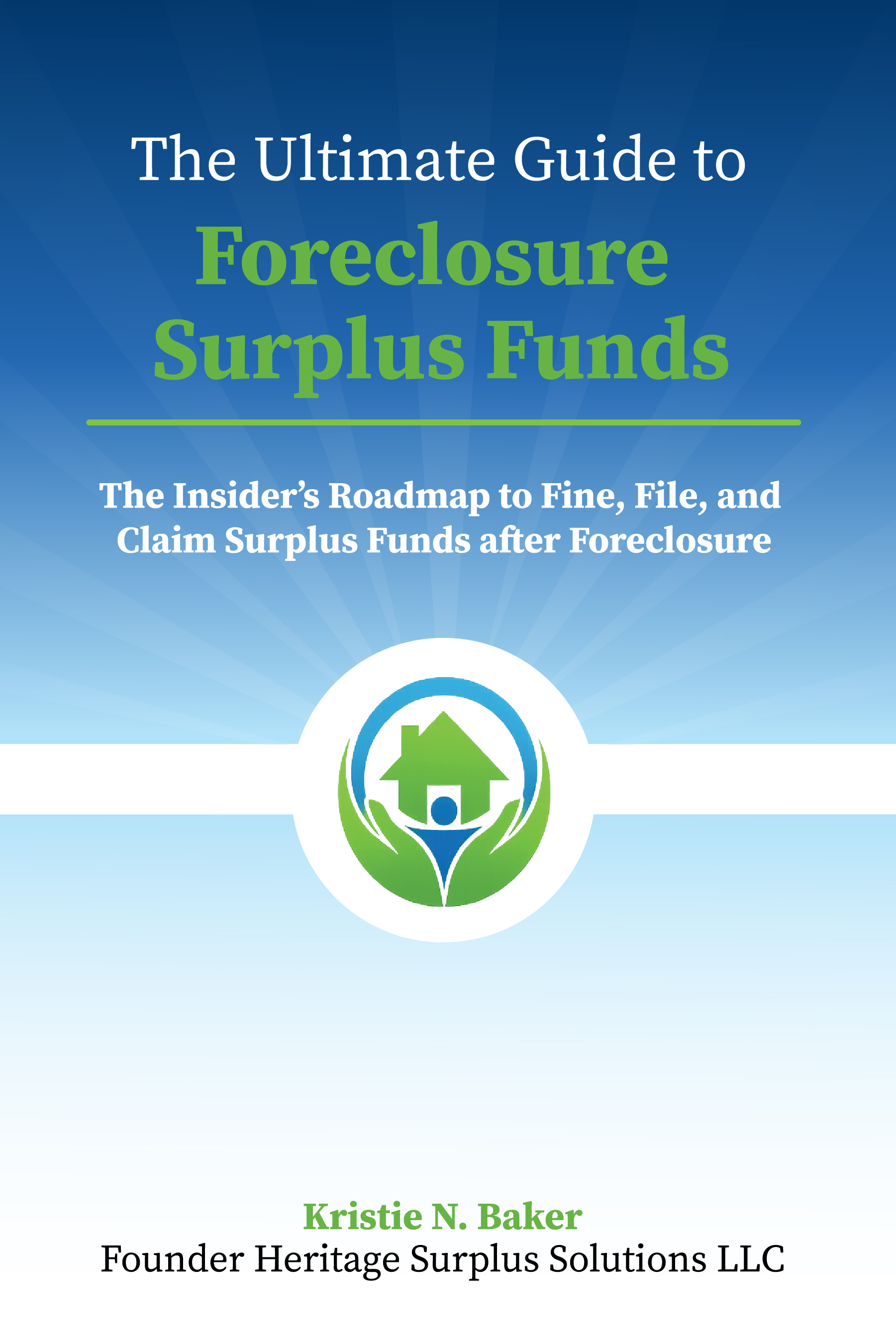
Why a DIY Kit?
We believe in integrity, expertise, and care. While we offer "done-for-you" services, we know that for many people, every dollar counts. If you have the time and the drive to do it yourself, you should keep as much of your equity as possible.
The DIY kit is a lower-cost alternative that gives you the professional tools used by recovery experts without the high commission fees. It’s about putting the power back in your hands.
Are You Ready to See if You’re Owed Money?
Don't wait until June 1st to start thinking about this. You can start by looking for signs you’re owed foreclosure surplus funds right now.
If you’ve lost a home in Atlanta, East Point, College Park, or anywhere in Fulton County due to a tax sale, the clock is already ticking. Your equity is still your equity: even if the house has a new owner.
Check out our FAQ page for more answers to common questions about Georgia surplus funds, and keep an eye on this blog. We’ll be sharing more tips as we head toward our big launch on June 1st.
You've got this, and we're here to help you navigate the way home: or at least, the way to the money that house left behind.

Disclaimer: Heritage Surplus Solutions is not a law firm and does not provide legal representation or legal advice. Our DIY kits and educational materials are for self-help purposes only. We do not guarantee the recovery of funds, as every case depends on individual circumstances and county or state regulations.
