
What to Do First When You Think You're Owed Surplus Funds: A 10-Minute Checklist
If your property was sold through foreclosure, there may be one question worth checking: Did the sale leave money after the amounts owed and allowable costs were paid?
That possible leftover money may be called surplus funds, excess proceeds, or foreclosure overages. Not every foreclosure sale creates a surplus, and whether you can claim any funds depends on the details and the rules where the property is located. But you don’t need to solve the whole case today.
Start with this short checklist. In about 10 minutes, you can gather the basics and know what to ask next. This first check costs nothing and doesn’t commit you to filing a claim or hiring anyone.
Your 10-minute surplus funds checklist
1. Confirm that a foreclosure sale happened, and when
Start by checking whether the property was actually sold through a foreclosure process. A notice of foreclosure or a missed payment alone doesn’t confirm that a sale took place.
Look for a sale notice, court record, trustee or sheriff’s sale report, or recorded deed showing the transfer after the sale. If you’re not sure where to look, search the county’s official public-records website or call the county office that handles property or court records.
Write down the sale date, if you can find it. The sale date, or another event, such as the date a notice was sent, may matter when you check claim deadlines.
2. Identify the county and type of sale
Write down the county and state where the property is located. Then note the type of foreclosure, if you know it:
Mortgage foreclosure: Started by a lender or another party enforcing a mortgage.
Tax foreclosure: Started because property taxes were unpaid.
HOA foreclosure: Started by a homeowners’ association over unpaid assessments or related charges.
The sale type can point you toward different records, offices, and claim procedures. Even within a state, processes can differ. For example, the Texas State Law Library’s foreclosure guide explains that some Texas sales are conducted by a trustee, while judicial sales may be conducted by a county official. That’s a Texas example, not a rule for every state.
3. Gather the basic property details
You don’t need a complete file to make your first inquiry. Jot down anything you have from this list:
Property address
Parcel number, also called an assessor’s parcel number or property ID
Foreclosure case number, if there was one
Former owner’s full name as it appeared in the records
Approximate foreclosure or sale date
These details help an office find the right record. If you can’t find a case number or parcel number right away, start with the property address and former owner’s name.
4. Find the office that handled the sale
The office to contact depends on the kind of foreclosure and local procedure. It might be a court clerk, sheriff, county treasurer, tax collector, trustee, or another office.
Start with the county’s official government website. Search for the office connected to the sale type, then call or email using the contact information listed there. If the first office doesn’t handle surplus proceeds, ask which office does.
A county’s process can include more than one step. For instance, Oakland County, Michigan’s tax-foreclosure surplus page describes a process involving the county treasurer and, in some cases, a court motion. That is a local example, not a universal process.
5. Ask whether surplus funds remain, and what the deadline is
Once you reach the right office, keep your questions straightforward:
Did this sale generate surplus funds or excess proceeds?
Are any funds still being held, and which office holds them?
What is the deadline to make a claim, and what event starts that deadline?
Where can I find the official claim instructions or forms?
Is a court filing, hearing, or additional step required?
A sale price by itself doesn’t prove that money is available to you. The office may need to account for the amounts owed, sale costs, liens, or other claims. And even if funds remain, the rules determine who may claim them and how they must apply.
Deadlines vary by state, county, and sale type. Our guide to surplus claim deadlines explains why it’s important to confirm the timeline for your specific case instead of relying on a general estimate.
6. Write down who you spoke with
Keep a simple call log. Record:
Date and time of your call or email
Office name and phone number or email
Name or job title of the person you spoke with, if provided
What they told you
Any forms, web pages, or follow-up steps they mentioned
If someone says the funds are in another office, write down the referral and contact that office next. A few notes can save you from repeating the same questions and help you keep track of deadlines.
A short script for your first call
If you’re unsure what to say, try this:
> “Hi, I’m checking on a property that went through foreclosure in [county]. The address is [address], and the former owner was [name]. Can you tell me whether the sale produced surplus funds, which office handles claims, and what deadline and official instructions apply?”
You don’t need to have every answer before you call. The goal is simply to find out where the records are and what the next step may be.
Keep your first inquiry simple, and protect your information
You can usually begin with basic property details. Before sharing sensitive information like a Social Security number, bank details, or copies of identification, make sure you’re speaking with an official office or a service you’ve independently checked. Use contact details from a government website, not just a number provided in an unexpected message.
Also, don’t assume that finding a possible surplus automatically means you’re entitled to all of it. Other people or creditors may have a legal interest, and the process may require proof of ownership or heirship. If the former owner has passed away, probate or other documentation may be needed.
What if you’d rather not manage the paperwork yourself?
It’s okay if this first check brings up more questions. Foreclosure surplus recovery can involve tracking down records, contacting agencies, meeting deadlines, and preparing claim paperwork. The process varies, and no one should promise a result before the case is reviewed.
Heritage Surplus Solutions helps people research possible surplus funds and navigate the claim process. We handle the research and paperwork, contact the appropriate agencies, and coordinate with notaries or attorneys when needed. There’s no upfront cost. If we don’t successfully recover your funds, you don’t pay us a fee.
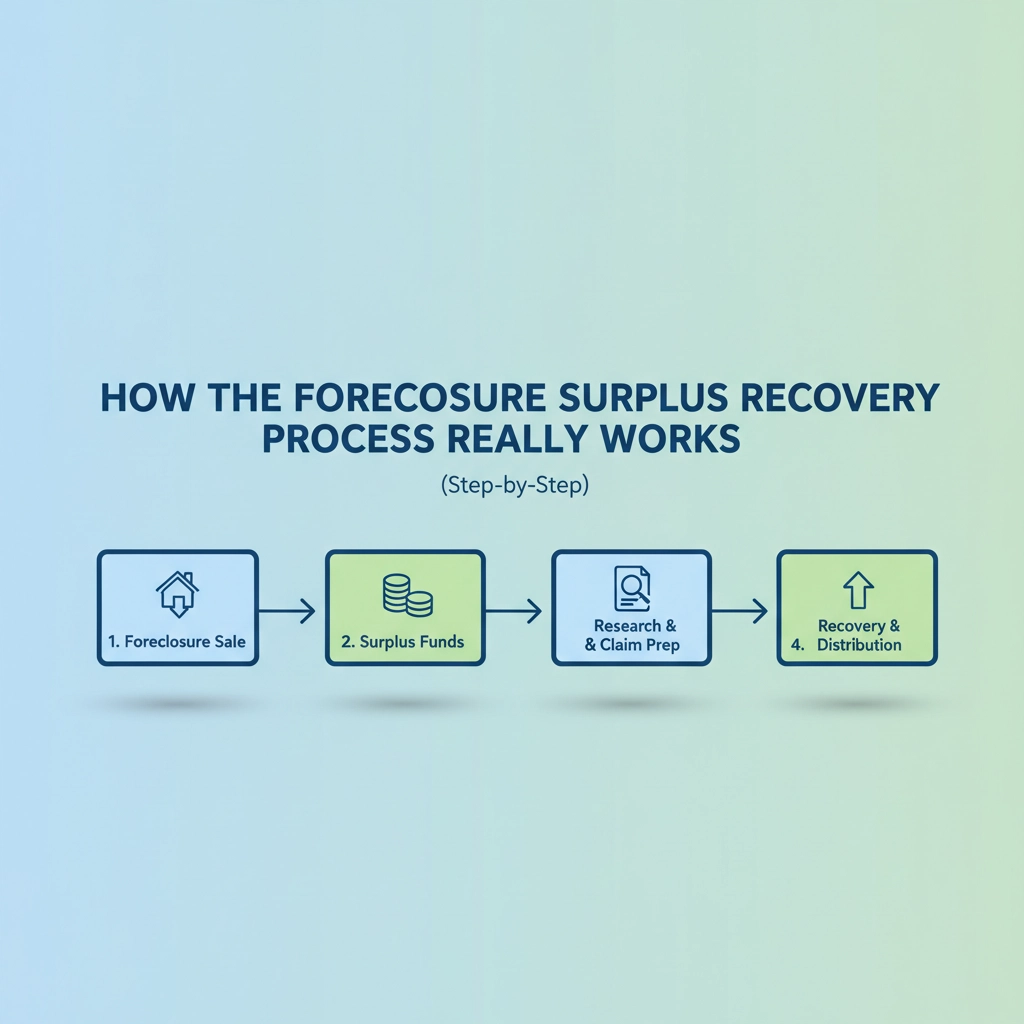
You can learn more about how the foreclosure surplus recovery process works or contact Heritage Surplus Solutions with questions.
And if you’d prefer to explore the process on your own, our DIY Surplus Claim Kit is coming soon. It’s being developed to offer practical guidance for people who want help organizing their own claim.

Your first step is just a check
You don’t need to file a claim, make a decision, or commit to working with anyone today. Start by confirming that a sale took place, noting the county and sale type, gathering the basic property details, and asking the right office whether funds remain and what deadline applies.
That small first step may give you a clearer picture of your options. And if the process feels confusing, you don’t have to figure it out all at once.
This article provides general educational information, not legal advice. Claim rules and deadlines vary by location and case. Confirm instructions with the government office handling the sale or consult a qualified attorney about your situation.