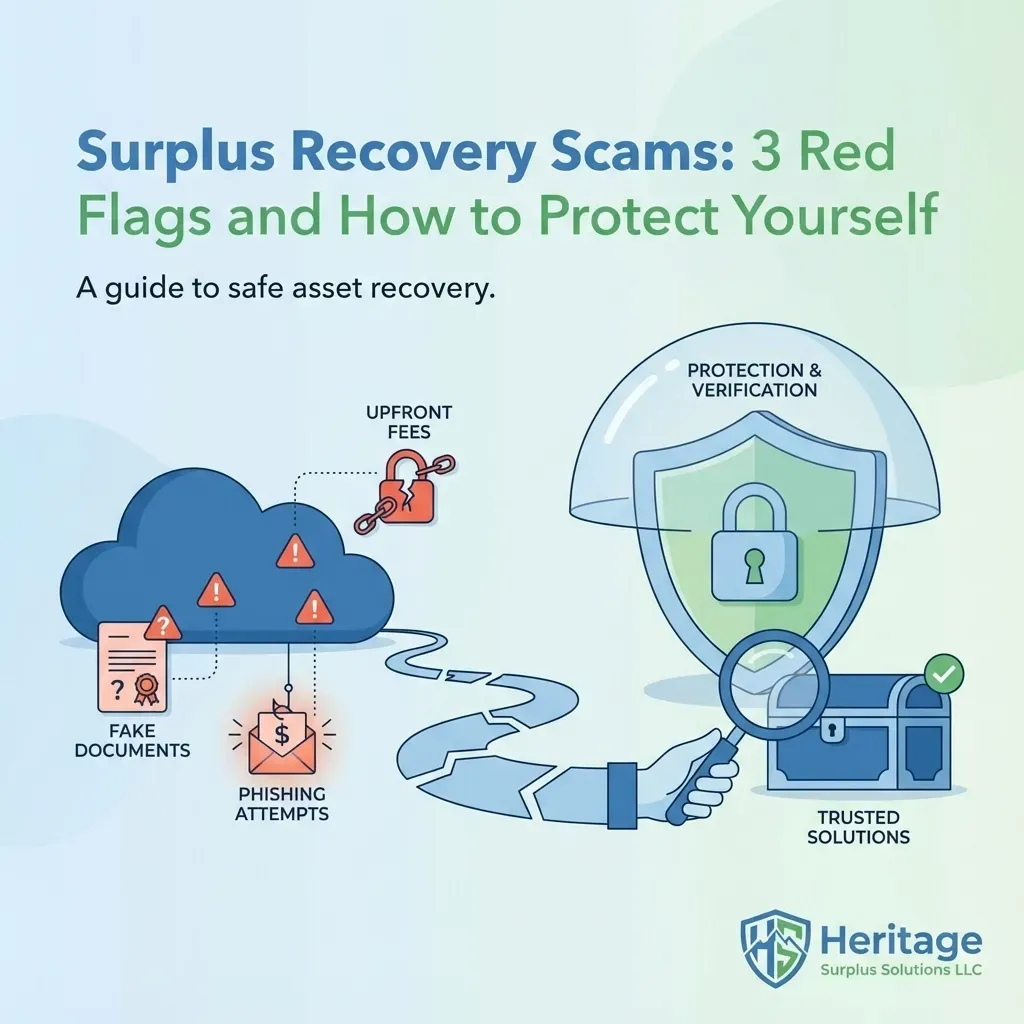
Surplus Recovery Scams: 3 Red Flags and How to Protect Yourself
Sarah's hands trembled as she read the letter that arrived three months after losing her home to foreclosure. A company claimed they could help her recover "thousands of dollars" she was owed, but they needed her to sign documents immediately and pay a hefty upfront fee. Something felt wrong, but after months of financial stress, the promise of getting money back was tempting.
If you've recently gone through foreclosure, you might receive similar offers. Here's the truth: while surplus funds are real and you may be entitled to them, the foreclosure recovery industry is crawling with scammers who prey on vulnerable families during their most difficult moments.
Let's break down exactly what these scams look like and how you can protect yourself: because you deserve to keep every dollar that's rightfully yours.
The Truth About Surplus Funds (That Scammers Don't Want You to Know)
First, let's bust a common myth: surplus funds aren't some hidden secret that only special companies can access. When your home sells at foreclosure for more than what you owed on your mortgage, taxes, and associated costs, that leftover money legally belongs to you. It's called surplus funds or foreclosure overages.
This happens more often than you might think. If multiple buyers bid at the foreclosure auction or if your property value exceeded your debt, there could be thousands: sometimes tens of thousands: of dollars waiting for you.
The catch? You have to know about it and take action to claim it. And that's where scammers swoop in.

Red Flag #1: Outrageous Fees and Pressure for Upfront Payments
Here's where things get ugly. Legitimate surplus recovery should cost you 5-15% in fees, if you choose to hire help. Scammers? They'll demand anywhere from 35% to 75% of YOUR money.
Even worse, they often use a particularly cruel tactic: they'll offer you a small upfront payment: maybe $2,000 or $3,000: in exchange for signing over your rights to the surplus funds. What they don't tell you? You might actually be owed $20,000, $50,000, or more.
One documented case involved an elderly woman who received just $2,000 from a scammer while she was actually owed over $54,000. The scammer pocketed the difference and disappeared.
The reality check: You can often handle surplus fund claims yourself for less than $100 in filing fees. Even if you hire legitimate help, you should never pay more than 15% of the recovered amount, and you should never sign away your rights for a small upfront payment without knowing exactly how much you're owed.
Red Flag #2: High-Pressure Tactics and False Promises
Scammers create artificial urgency because they know that giving you time to think means losing the sale. They'll contact you with claims like:
"We can get your house back!"
"You only have 24 hours to decide!"
"We're the only company that can help you!"
"Sign now or lose this opportunity forever!"
Here's what's actually happening: these companies get your information from public foreclosure records. They know when surplus funds exist before you do, and they want to get to you first: before you realize you can handle this yourself or find legitimate help.
The truth: While there are deadlines for claiming surplus funds (usually 30 days to several years depending on your state), legitimate recovery doesn't require split-second decisions. Any honest professional will give you time to understand the process and read all documents carefully.

Red Flag #3: Confusing Documents and Rights Transfers
This is the scammers' favorite trick: getting you to sign documents that transfer your legal rights to surplus funds without clearly explaining what you're signing.
They might tell you:
"This is just a consultation form"
"We need this to investigate your case"
"This allows us to represent you"
In reality, you're signing over your legal right to claim the funds. Once that document is filed with the court, the scammer can claim YOUR money and there's often little you can do to reverse it.
Bottom line: Never, ever sign any document related to surplus funds unless you completely understand what you're agreeing to and have had time to review it thoroughly.
How to Protect Yourself From Surplus Recovery Scams
Do Your Own Research First
Before responding to any company, research your situation independently. Contact your local court clerk or sheriff's office to ask about surplus funds from your foreclosure. Many courts have simple forms you can fill out yourself.
Never Rush Into Agreements
Legitimate surplus recovery doesn't require emergency decisions. Take time to:
Research any company that contacts you
Get everything in writing
Have documents reviewed by a trusted attorney or legal aid organization
Verify exactly how much you're owed before signing anything
Work With Licensed Attorneys Only
If you decide you need help, work exclusively with licensed attorneys who specialize in surplus funds recovery. Avoid "surplus recovery agents" or companies that aren't law firms: many states don't allow non-attorneys to handle these claims, and working with unlicensed operators could be illegal.
Know Your State's Laws
Each state has different rules about surplus funds, including deadlines for filing claims and maximum fees that can be charged. Research your state's specific requirements or ask a legal aid organization for guidance.

The Real Path to Recovery
Here's what honest surplus fund recovery looks like: clear explanations, transparent fees, time to make decisions, and full disclosure of how much you're actually owed.
You have the right to understand every step of the process. You have the right to know exactly how much money is involved. And you have the right to keep the vast majority of what belongs to you.
The system doesn't have to be intimidating, and you don't have to navigate it alone. But you also don't have to hand over huge percentages of your money to companies that prey on people during difficult times.
Why Knowledge Is Your Greatest Asset
The foreclosure industry is complex, but it doesn't have to be mysterious. When you understand how surplus funds work, how to spot scams, and what legitimate recovery looks like, you can make informed decisions that protect both your money and your peace of mind.
That's exactly why I wrote "The Ultimate Guide to Foreclosure Surplus Funds." This comprehensive guide walks you through every aspect of the surplus recovery process: from determining if you have funds waiting to avoiding predatory companies to handling claims yourself when possible.
Inside the guide, you'll learn the exact red flags that signal scams, the specific documents courts require, and step-by-step instructions for protecting yourself throughout the entire process. Most importantly, you'll gain the confidence to navigate this system without fear.
Your Money, Your Choice
Surplus funds exist to help families recover financially after foreclosure. Don't let scammers turn your opportunity for recovery into another loss.
Remember Sarah from the beginning of this post? She decided to research surplus funds on her own before responding to that suspicious letter. She discovered she was owed $18,000 in surplus funds and was able to claim them herself for less than $100 in court fees. The company that contacted her would have charged her over $6,000 for the same result.
You deserve the same outcome. You deserve to keep what's rightfully yours, and you deserve honest guidance throughout the process.
If you're ready to learn how to protect yourself and reclaim your surplus funds safely, download our complete guide today. Your financial recovery shouldn't make someone else rich: it should help you build a stronger future.
Have questions about surplus funds or think you might be dealing with a scam? Feel free to reach out for honest guidance. At Heritage Surplus Solutions, we believe everyone deserves transparent information and compassionate support during financial recovery.
