
What Are Surplus Funds? The Hidden Opportunity Most Homeowners Miss
Picture this: You've just gone through one of the most stressful experiences of your life: losing your home to foreclosure. The last thing on your mind is that you might actually be owed money from that painful process. But here's something that might surprise you: millions of dollars in surplus funds sit unclaimed every year simply because homeowners don't know they exist.
If you've experienced foreclosure, or know someone who has, this could be one of the most important conversations we'll ever have. Let's grab that coffee and talk about what surplus funds really are: and why they might be the silver lining you never knew existed.
What Exactly Are Surplus Funds?
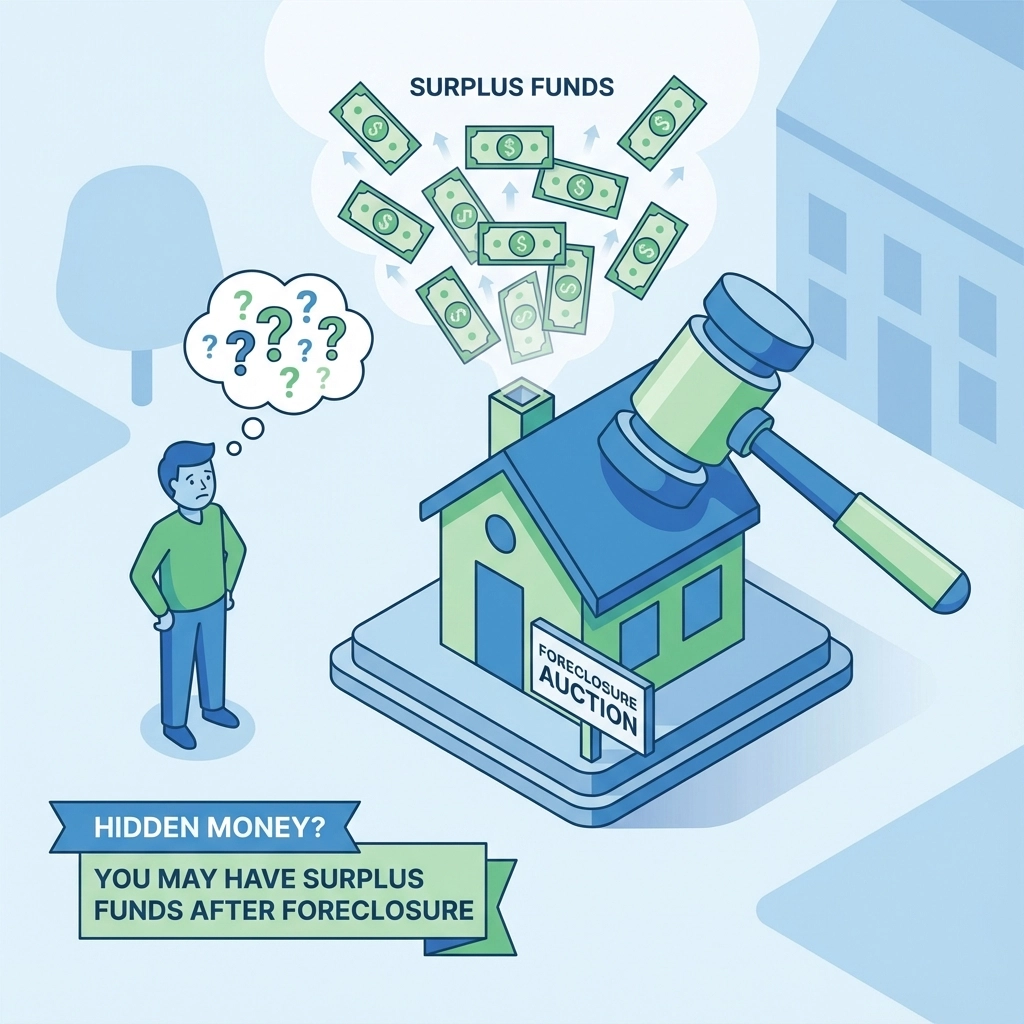
Let's start with the basics, because this stuff can get confusing fast. Surplus funds are the leftover money when your foreclosed home sells for more than what you actually owed on it.
Think of it this way: imagine you owed $200,000 on your mortgage, plus another $15,000 in foreclosure costs, legal fees, and back taxes. That's $215,000 total. But when your house goes to auction, it sells for $250,000. Where does that extra $35,000 go?
That's your surplus funds: and legally, it belongs to you.
I know what you're thinking: "If the money is mine, why don't I automatically get it?" Great question, and here's where it gets frustrating. The system doesn't just hand you a check. You have to know about it, and you have to actively claim it.
How Surplus Funds Actually Work
Let me walk you through exactly how this happens, step by step, because understanding the process is half the battle.
When your home goes to foreclosure auction, the sale proceeds get distributed in a very specific order:
First: The primary mortgage lender gets paid their judgment amount
Second: All foreclosure-related costs get covered (legal fees, auction expenses, court costs)
Third: Any junior liens get paid (like second mortgages, HOA fees, property taxes)
Finally: Whatever's left becomes surplus funds
Here's a real-world example: Sarah's home in Orlando was foreclosed on with a judgment of $180,000. When it sold at auction for $220,000, there was $40,000 left after all debts and costs were paid. That $40,000 was Sarah's surplus funds: her equity that she'd built up over the years of homeownership.
But here's the kicker: Sarah had no idea this money existed until someone told her about it two years later.
Why Most Homeowners Miss This Opportunity
You're probably wondering how something like this flies under the radar. Unfortunately, there are several reasons why surplus funds become this "hidden opportunity":
Nobody Tells You About It
The foreclosure process is overwhelming, and frankly, nobody involved has much incentive to educate you about surplus funds. The auction company, the lender, even some attorneys: they're focused on their part of the process, not on making sure you know about potential leftover money.
The Paperwork is Intimidating
Even if you do find out about surplus funds, the claim process involves legal forms, court filings, and specific deadlines. After going through foreclosure, many people simply don't have the energy or confidence to tackle more legal paperwork.
Time Limits Create Pressure
Different states and counties have different deadlines for claiming surplus funds. Miss that window, and your money could end up with the state or county government. The clock starts ticking from the moment the surplus is created, whether you know about it or not.
Scammers Muddy the Waters
Unfortunately, this industry has attracted some bad actors who prey on vulnerable homeowners. Some people avoid the whole thing because they've heard horror stories about scams, not realizing there are legitimate ways to pursue their rightful funds.

Who's Actually Entitled to Surplus Funds?
This is really important to understand, because the rules are specific. You're entitled to surplus funds if you were the "owner of record" when the foreclosure lawsuit was filed. This means you were the official owner of the property when that initial legal paperwork (called a lis pendens) was recorded.
It doesn't matter that you no longer own the house: if surplus funds were created from its sale, and you were the owner when the foreclosure started, that money is legally yours.
In some cases, other parties might have claims too:
Subordinate lienholders (like second mortgage companies)
HOA associations with unpaid dues
Contractors with valid liens
But here's the good news: these other claims get paid first, in order of priority. If there's still money left after everyone else gets paid, it goes to you as the former homeowner.
How to Check If You Have Surplus Funds
Now we're getting to the good stuff: the actionable information you can use right now. If you've experienced foreclosure, here's how to find out if surplus funds are sitting there with your name on them:
Start with the Court Records
Go to your county's Clerk of Court website and search for your foreclosure case. Look for something called a "Certificate of Disbursements" or "Final Report." This document shows exactly how the auction proceeds were distributed.
Check Multiple Properties
If you've had more than one foreclosure, check each property separately. Surplus funds are property-specific, so you might have funds from one foreclosure but not another.
Don't Forget About Timing
Some surplus funds take months to be calculated and officially recognized. If your foreclosure was recent, the surplus might still be working its way through the system.
Look Beyond Your Home State
If you've moved since the foreclosure, don't assume you can't have surplus funds in your previous state. The money follows the property, not your current address.

The Real Impact of Missing This Opportunity
Let's talk about what this really means for families. We're not just talking about pocket change here. I've seen surplus funds ranging from a few thousand dollars to over $100,000, depending on the home's value and how much equity had been built up.
For families recovering from foreclosure, this money can be life-changing:
It can help with first and last month's rent on a new place
It can rebuild an emergency fund
It can provide stability during a really difficult transition
It can give you back some of the financial security you thought was lost forever
The tragedy is that this money is already yours: you just need to know how to claim it.
Knowledge is Your Greatest Advantage
Here's something I want you to understand: the system isn't designed to keep this money from you, but it's not designed to make it easy for you either. It's just a bureaucratic process that assumes you'll figure it out on your own.
But armed with the right knowledge and a clear step-by-step process, claiming surplus funds doesn't have to be overwhelming or impossible. You just need to know what you're looking for and how to navigate the system.
That's exactly why I created "The Ultimate Guide to Foreclosure Surplus Funds": to give families the complete roadmap they need to understand this process, avoid the pitfalls, and successfully claim what's rightfully theirs. The guide walks you through everything from determining if surplus funds exist to filing the correct paperwork and avoiding common mistakes that can derail your claim.
Your Next Steps
If you're reading this and thinking, "This could apply to me," don't let this opportunity slip away. Here's what you should do right now:
Check your foreclosure case records using the steps I outlined above
Document what you find: take screenshots, print records, keep everything organized
Act quickly if you discover surplus funds: remember, there are time limits
Get educated about the process before you start filing paperwork
The most important thing is to not let fear or confusion stop you from investigating whether you're owed money. Even if you discover there are no surplus funds from your foreclosure, at least you'll know for certain. But if there are funds waiting for you, every day you delay is a day closer to potentially losing them forever.
You Deserve What's Rightfully Yours
Going through foreclosure is one of the most difficult experiences a family can face. But if your home sold for more than you owed, there might be a bright spot waiting for you in the form of surplus funds.
Don't let the system keep what belongs to you. With the right knowledge and approach, you can turn this confusing process into an opportunity for financial recovery.
Remember: millions of dollars in surplus funds go unclaimed not because families don't deserve the money, but because no one ever told them it existed. Now you know: and knowledge truly is your greatest advantage when dealing with the foreclosure system.
Ready to take the next step? Download "The Ultimate Guide to Foreclosure Surplus Funds" and get the complete roadmap to understanding, finding, and claiming surplus funds with confidence. You deserve to reclaim what's rightfully yours.
