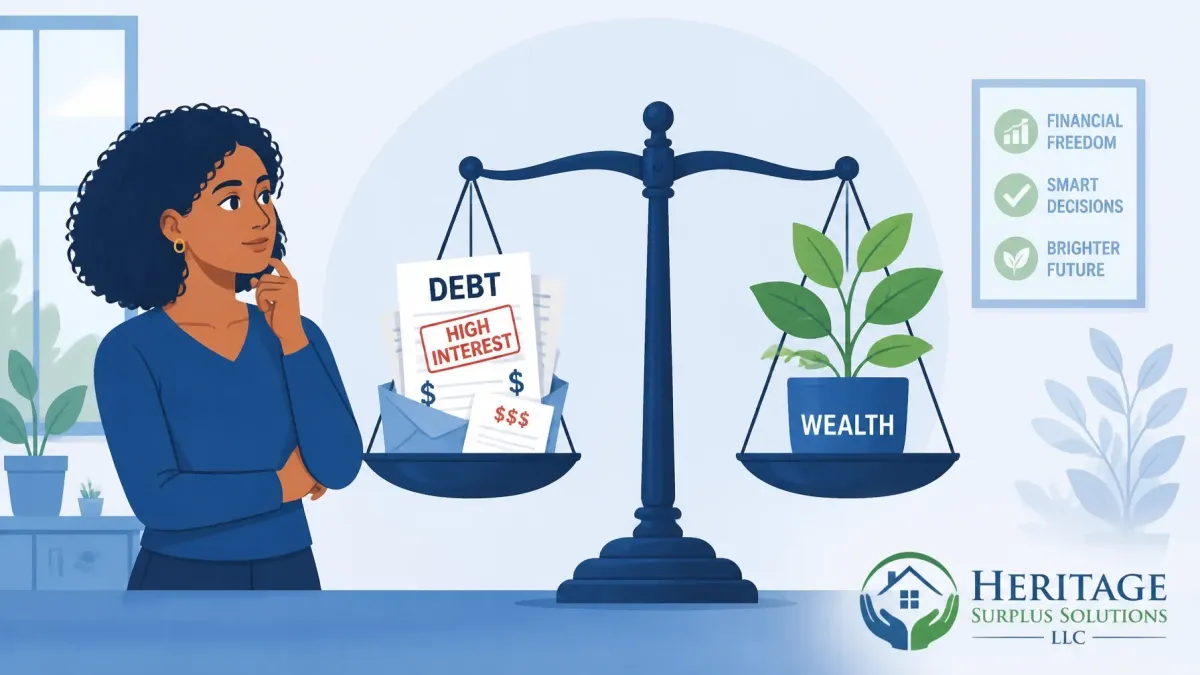
Paying Off Debt vs. Building Wealth: What Surplus Fund Recipients Get Wrong
So, you’ve finally done it. You navigated the paperwork, waited through the processing times, and that check for your foreclosure surplus funds has finally arrived. First off, take a deep breath. You’ve been through a lot, and this is a huge win.
But now comes the part that can feel just as stressful as the foreclosure itself: What do I do with this money?
It’s tempting to want to fix everything at once. Maybe you want to wipe out every credit card balance you have, or maybe you’re looking at the stock market thinking, "This is my chance to finally build real wealth."
The truth is, most people get the "Debt vs. Wealth" debate a little bit wrong because they look at it through the lens of math alone, forgetting the emotional side of money. Grab a cup of coffee, and let’s talk through how to handle this windfall with compassion for your past and a clear eye on your future.
The Most Common Mistake: The "All or Nothing" Approach
When a surplus check arrives, the biggest mistake we see is people rushing to one extreme or the other.
Some folks feel so much "debt shame" from the foreclosure process that they dump every cent into old collections or low-interest loans, leaving themselves with $0 in the bank for the next emergency. Others are so excited to "get ahead" that they ignore high-interest debt and jump straight into risky investments.
The secret isn't choosing one or the other; it’s about sequencing.
Step 1: The Safety Net (Before You Do Anything Else)
Before you pay a single creditor or buy a single share of an index fund, you need a "Life Preserver."

Foreclosure often leaves people with very little liquid cash. If you use your entire surplus to pay off debt, and then your car breaks down next month, you’re right back where you started, relying on high-interest credit cards or predatory loans.
The Goal: Set aside at least 1–3 months of essential living expenses in a simple, high-yield savings account. This isn't "investing," and it isn't "ignoring debt." It’s making sure that no matter what happens, you aren't going backward.
Step 2: Tackle "Hazard Debts" (The Debt You Can't Afford to Keep)
Not all debt is created equal. When deciding between paying off debt and building wealth, look at the interest rate.
If you have a credit card charging you 24% interest, and the stock market historically returns about 8–10% per year, the math is simple: Paying off that card is like getting a guaranteed 24% return on your money. You won’t find that anywhere else.
Focus on these first:
High-Interest Credit Cards: Anything over 8–10% interest.
Payday Loans: These are wealth-killers. Get rid of them immediately.
Legal Judgments: If you have creditors who have the power to garnish your wages or levy your bank account, clearing these is a priority for your peace of mind.
If you’re unsure about which debts are most "dangerous," checking out our FAQ page or reading about common mistakes in the surplus claim process can help you understand what might be lingering from your foreclosure.
Step 3: The Rebuilding Phase (Investing for the Long Term)
Once the "hazard debts" are gone and your safety net is in place, now we can talk about building wealth. This is the part that feels like planting a tree. It takes time, but it’s the only way to ensure you never face financial instability like this again.

For most surplus fund recipients, a "boring" investment strategy is the best one. You don't need to pick the next hot tech stock. Consider:
Low-cost Index Funds: These allow you to own a tiny piece of hundreds of companies at once, spreading your risk.
Retirement Accounts (IRA/401k): If you have earned income, putting surplus funds into these accounts can often give you a nice tax break, too.
Why "Wealth" is More Than Just a Bank Balance
We’ve worked with a lot of people at Heritage Surplus Solutions, and one thing we’ve learned is that wealth is also about stability.
Sometimes, the best "investment" isn't the stock market, it’s investing in your own ability to live a stress-free life. For some, that might mean using a portion of the surplus for a deposit on a stable rental home or even working toward owning a home again. (And yes, it is possible to own again! Stay tuned for our upcoming posts in this series where we dive into exactly how to do that).
A Simple Framework for Your Surplus
If you’re staring at your check and feeling overwhelmed, try this order of operations:
Claim your funds safely: Make sure you aren't paying hidden fees. If you haven't claimed your funds yet, we can help you navigate the legal maze at no upfront cost.
The $2,000 Starter Fund: Put $2,000 in a savings account. Don’t touch it.
The "High-Fire" Debts: Pay off anything with an interest rate over 10%.
The Full Safety Net: Build that savings account up to 3 months of expenses.
Invest the Rest: Put the remainder into a diversified investment account or save it for a future down payment.
You Don't Have to Do This Alone
Dealing with foreclosure is exhausting. Reclaiming your surplus funds shouldn't be. Whether you’re just starting the process or you’ve already received your funds and need guidance on what’s next, we’re here to help.

At Heritage Surplus Solutions, we pride ourselves on a compassionate, educational approach. We handle the attorneys, the notaries, and the government red tape so you can focus on what matters: your future.
If you want to learn more about how the process works, you can download our Insider’s Roadmap here or contact us today for a free consultation. There’s no risk: we only get paid if you do.
You’ve already taken the biggest step by getting your surplus funds back. Now, let’s make sure that money works as hard for you as you’ve worked to get your life back on track.
